Intracellular bacterial pathogens can invade and persist within host cells, including macrophages, where they evade immune clearance and antimicrobial treatment by exploiting host cell membranes and intracellular vesicles. This intracellular lifestyle can lead to persistent, recurrent, and even systemic infections. Pathogens such as Salmonella and Staphylococcus aureus are capable of forming protected intracellular reservoirs. Although antimicrobial peptides possess several advantages, including rapid bactericidal activity, multimodal mechanisms of action, and a relatively low propensity to induce resistance, most antimicrobial peptides cannot efficiently cross eukaryotic cell membranes, which substantially limits their therapeutic potential against intracellular infections. Identifying suitable cell-penetrating carriers that simultaneously improve cellular uptake, preserve direct antibacterial activity, and confer favorable in vivo pharmacokinetic properties therefore remains a major challenge.
Recently, a research team led by Prof. Yipeng Wang at the Yantai Institute of Coastal Zone Research, Chinese Academy of Sciences, in collaboration with partner institutions, made progress in using cell-penetrating peptides to enhance antimicrobial peptide therapy against intracellular bacterial infections. The researchers identified Bac7–HC1 as a promising lead conjugate.
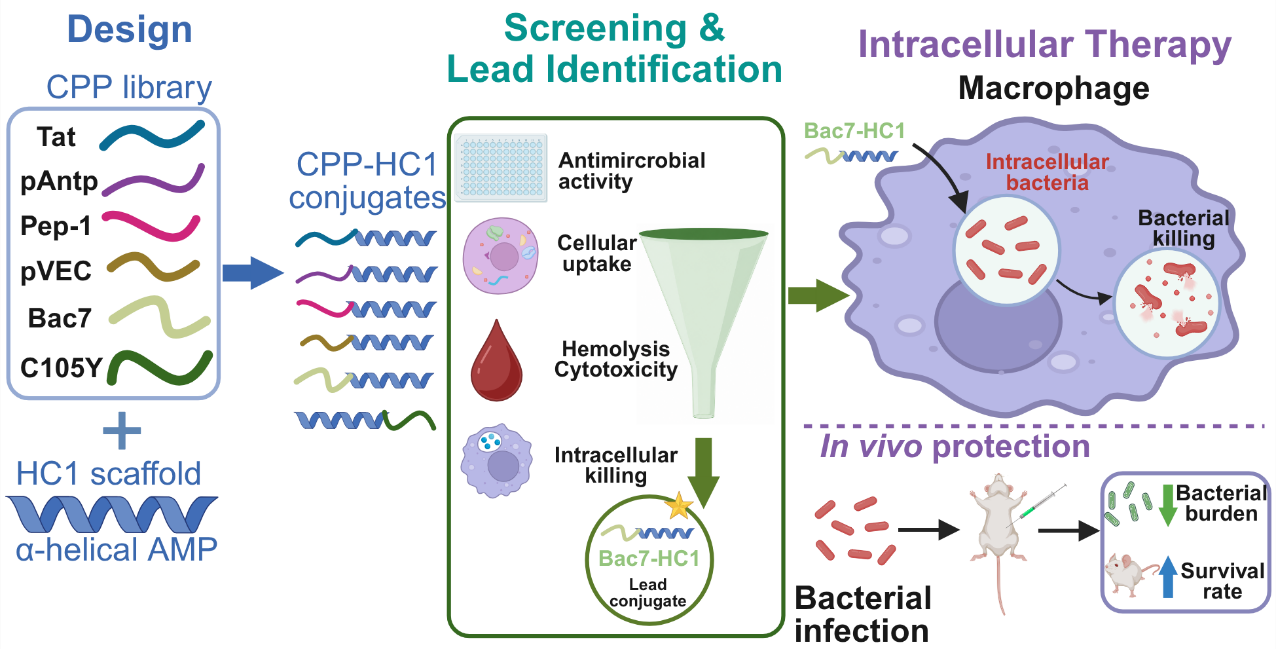
Figure 1. Design, construction, screening, and evaluation workflow of cell-penetrating peptide–antimicrobial peptide conjugates for treating intracellular bacterial infections
The team used HC1, an optimized α-helical antimicrobial peptide derived from a sea snake cathelicidin, as the parent scaffold. Six representative cell-penetrating peptides—Tat, Penetratin, Pep-1, pVEC, C105Y, and Bac7—were covalently conjugated to HC1. A systematic screening platform was then established to evaluate in vitro antibacterial activity, safety, intracellular bacterial clearance, cellular uptake mechanisms, antibiofilm activity, and in vivo protective efficacy.
The results showed that enhanced cellular uptake did not necessarily translate into superior intracellular therapeutic performance. Although HC1–C105Y displayed the highest level of cellular uptake, its direct antibacterial activity was relatively weak. Tat–HC1 exhibited strong intracellular bacterial clearance in macrophage infection models but did not achieve the best therapeutic outcome in vivo. In contrast, Bac7–HC1 achieved a more favorable balance among direct antibacterial potency, uptake by host cells, and biocompatibility. It also retained the multimodal bactericidal mechanisms of HC1, including bacterial membrane damage, membrane depolarization, and increased reactive oxygen species production, while exhibiting pronounced activity against bacterial biofilms.
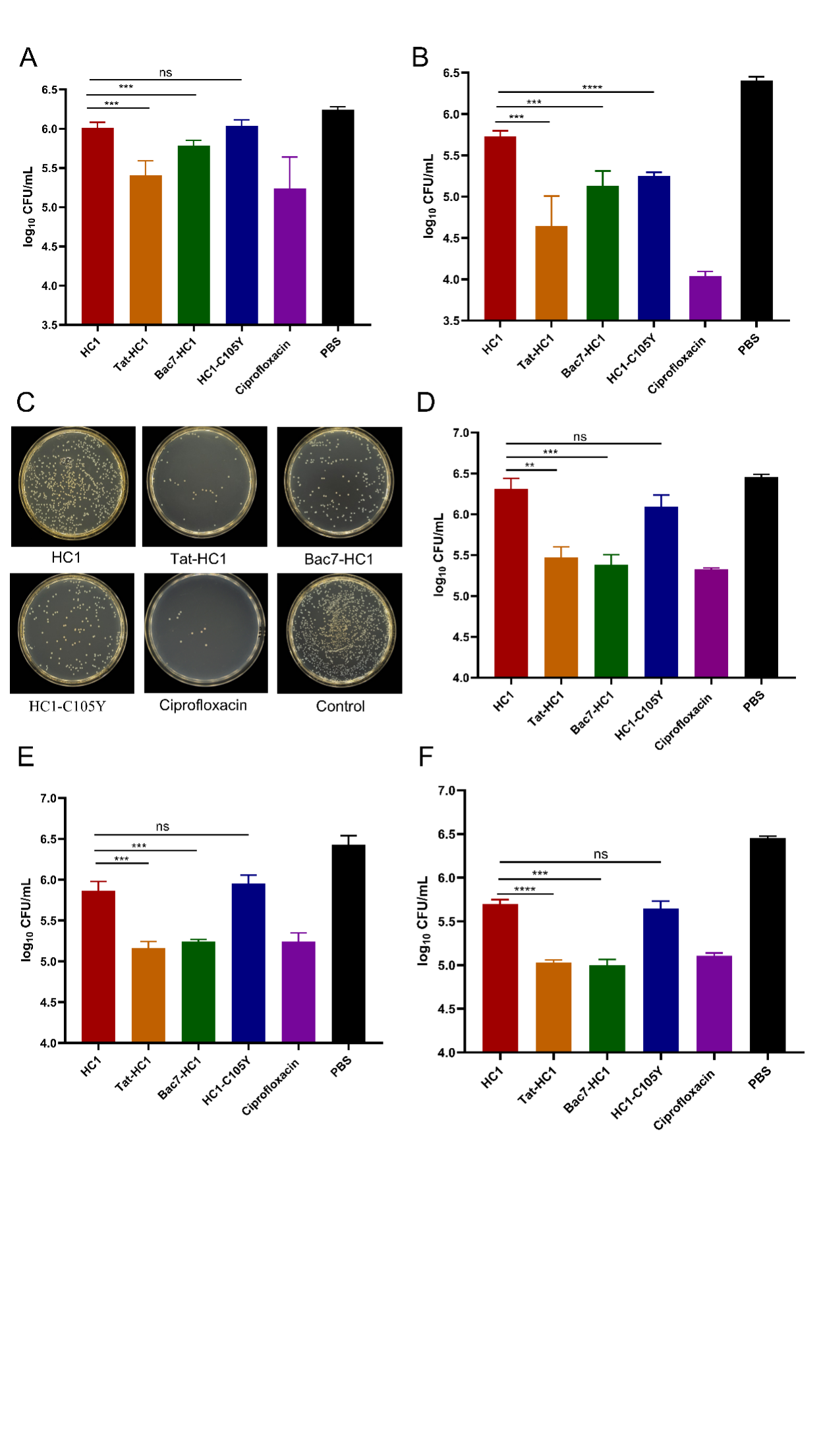
Figure 2. CPP–HC1 conjugates enhance the clearance of intracellular Salmonella Typhimurium and Staphylococcus aureus in macrophages
In a mouse model of systemic infection caused by Salmonella enterica serovar Typhimurium, Bac7–HC1 significantly improved animal survival, reduced bacterial burdens in multiple organs and the peritoneal cavity, and suppressed the production of pro-inflammatory cytokines, including IL-6, IL-1β, and TNF-α. Pharmacokinetic analyses further showed that Bac7–HC1 achieved higher plasma exposure and improved systemic availability following intraperitoneal administration. These findings indicate that its superior in vivo efficacy results from the combined contributions of enhanced intracellular delivery, direct bactericidal activity, and favorable pharmacokinetic behavior, rather than from cell penetration alone.
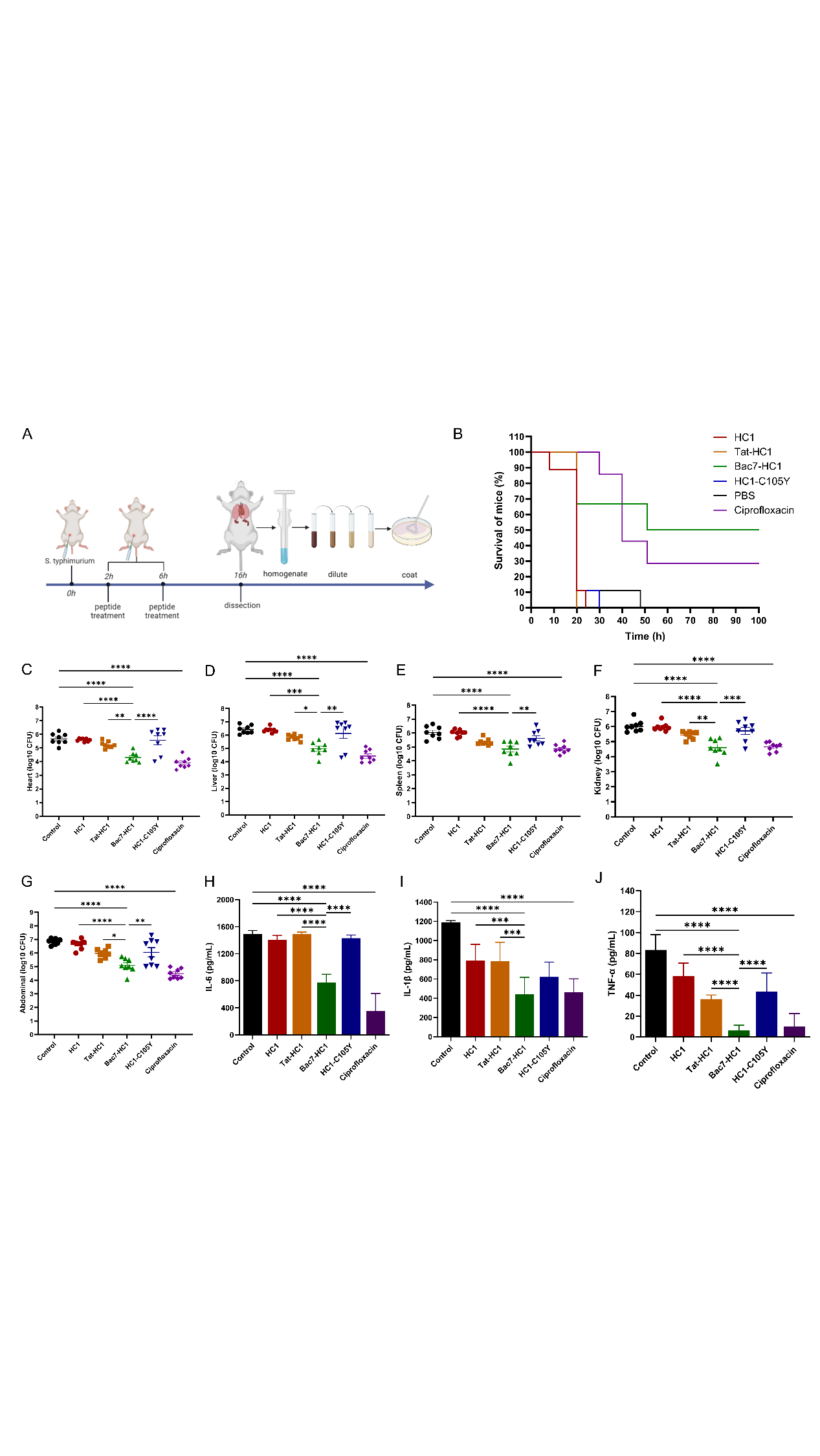
Figure 3. In vivo protective efficacy of Bac7–HC1 in a mouse model of systemic Salmonella Typhimurium infection
The study suggests that cell-penetrating peptides with intrinsic antimicrobial activity, high positive charge, and amphipathic properties may serve as more effective functional partners for α-helical antimicrobial peptides. The findings provide a systematic evaluation framework for the rational design and translational development of antimicrobial peptide therapeutics targeting intracellular bacterial infections.
The study, entitled “Screening of Cell-Penetrating Peptides To Enhance the Therapeutic Efficacy of α-Helical Antimicrobial Peptides against Intracellular Bacterial Infections,” was published in the internationally recognized medicinal chemistry journal Journal of Medicinal Chemistry. The work was supported by the National Natural Science Foundation of China, the Key Research and Development Program for Social Development of Jiangsu Province, and the Yantai Scholar Program. Shuangyu Li, a doctoral student at the Yantai Institute of Coastal Zone Research, and Weijing Hao of Tangshan Gongren Hospital are co-first authors. Prof. Aili Wang of the Southern Marine Science and Engineering Guangdong Laboratory and Prof. Yipeng Wang of the Yantai Institute of Coastal Zone Research are co-corresponding authors.
Paper Information:
Shuangyu Li, Weijing Hao, Zifan Ye, Guoxiang Mo, Chenchen Shi, Xiangjin Kong, Jingjing Zhang, Xudong Jiao, Aili Wang, Yipeng Wang. Screening of Cell-Penetrating Peptides To Enhance the Therapeutic Efficacy of α-Helical Antimicrobial Peptides against Intracellular Bacterial Infections. Journal of Medicinal Chemistry. 2026 Jul 10. doi: 10.1021/acs.jmedchem.5c03688.